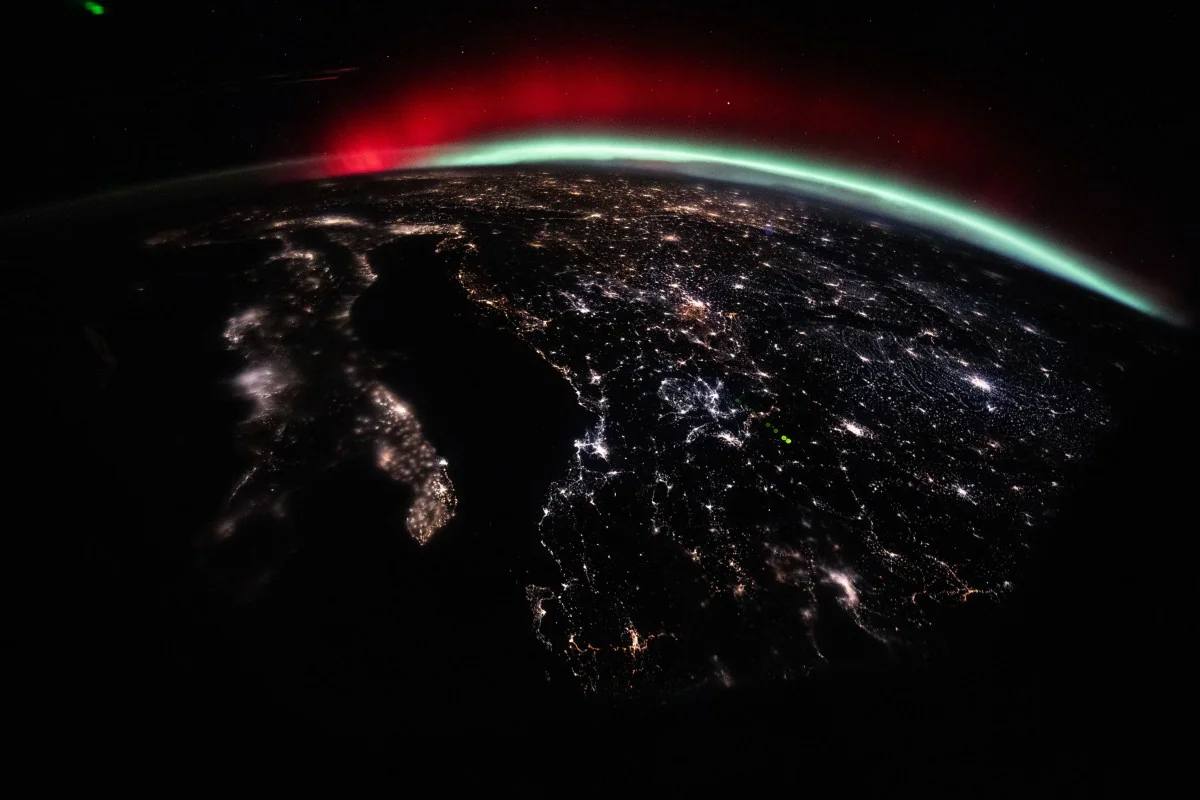
Fredrik Sommerseth Olsen describes Aurora Shield as “our planetary signature.” The northern lights give that idea a familiar image. Their moving curtains of light make an otherwise invisible interaction between Earth and space visible.
Earth’s magnetic environment shapes the motion of charged particles. When energetic particles collide with gases high in the atmosphere, the gases glow. That glow is the aurora. In ZENIT, Aurora Shield names a proposed protective field concept that carries a visual reminder of Earth.
These parallels explain the jobs ZENIT’s concepts are designed to do. The linked pages explore those concepts in more depth.
SafeSpots and emergency power
Think of a building that keeps emergency lights and communications running during a blackout. SafeSpots explore the same choice at a facility level. With limited reserve power, decide which services the people inside need first.
Think of a status board alongside an analyst. Living Systems Intelligence (LSI) gives Earth facility operators a view of which services are available and how certain that picture is. NEXUS compares equipment readings with the model and flags discrepancies.
On the International Space Station, equipment recovers water, removes carbon dioxide and replenishes oxygen. ZENIT’s Qi life-support study asks the same practical question. What work has to happen behind the cabin walls for the crew to keep breathing and drinking?
A car moves engine heat in coolant to a radiator, where passing air carries it away. The Qi cooling concept also carries heat away from equipment. In the vacuum of space, the external panels release that heat as infrared radiation.
A ship’s watertight subdivision helps limit the spread of flooding. The Qi cabin exercise uses the same safety principle for a different hazard. If the air in one section becomes unsafe, isolating it helps protect the crew in other sections.