DEVELOPMENT CONCEPTS / EQUIPMENT R1EARTH & SPACE / 09 NOV 2026
THE ZENIT PROGRAM / EQUIPMENT
Tools for Earth. Support beyond.
Four new Earth equipment proposals connect inspection, environmental knowledge, useful heat and essential services. Refined crew illustrations bring the Space equipment designs into the same collection.
04 EARTH DEVELOPMENT CONCEPTS 02 REFINED CREW DESIGNS
01 / NEW EARTH PROPOSALS
Start with what you can measure.
Choose a device, turn its exterior concept model and explore the proposed interfaces. These visual models introduce research directions, with prototype work and measured performance still ahead.
PREPARING 3D MODELEXTERIOR CONCEPT / NOT A RATED PRODUCT
Enable JavaScript to rotate the models. All device descriptions remain available.
Drag to rotate · Arrow keys to orbit · + / − to zoom
Concept appearance only. The model does not define dimensions, equipment selection, construction details or tested performance.
FIRST PROTOTYPE GOAL
Thermal imaging, temperature and humidity logging, and a record for comparing observations before and after a repair.
ZENIT CONNECTION
ZENIT infrared research · LSI-readable information · NEXUS diagnostic research.
DEVELOPMENT BASIS
Development proposal. Measurement accuracy, usability and the value of the combined interface need prototype testing.
02 / CREW DESIGN COLLECTION
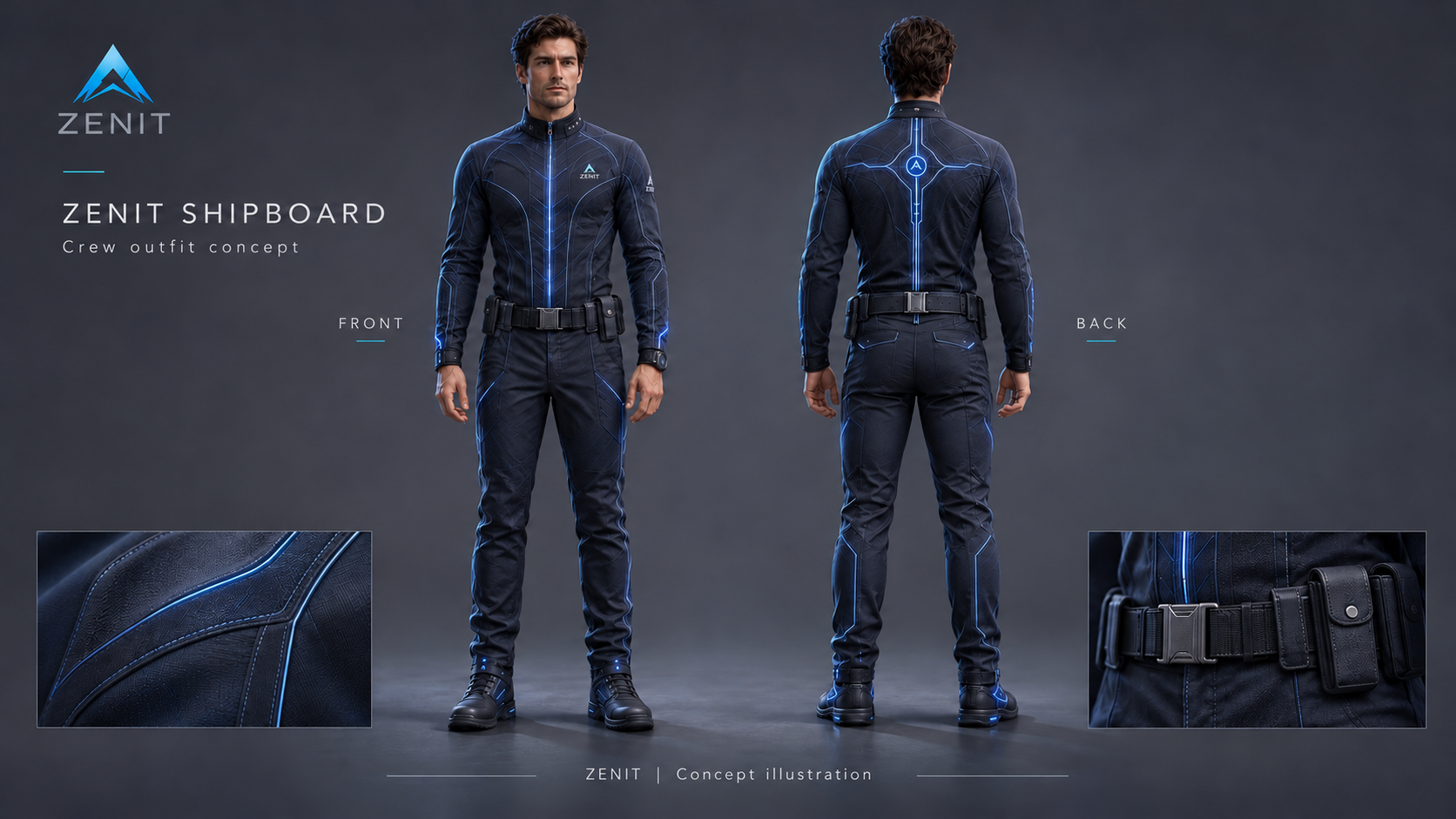
Equipment for the people aboard.
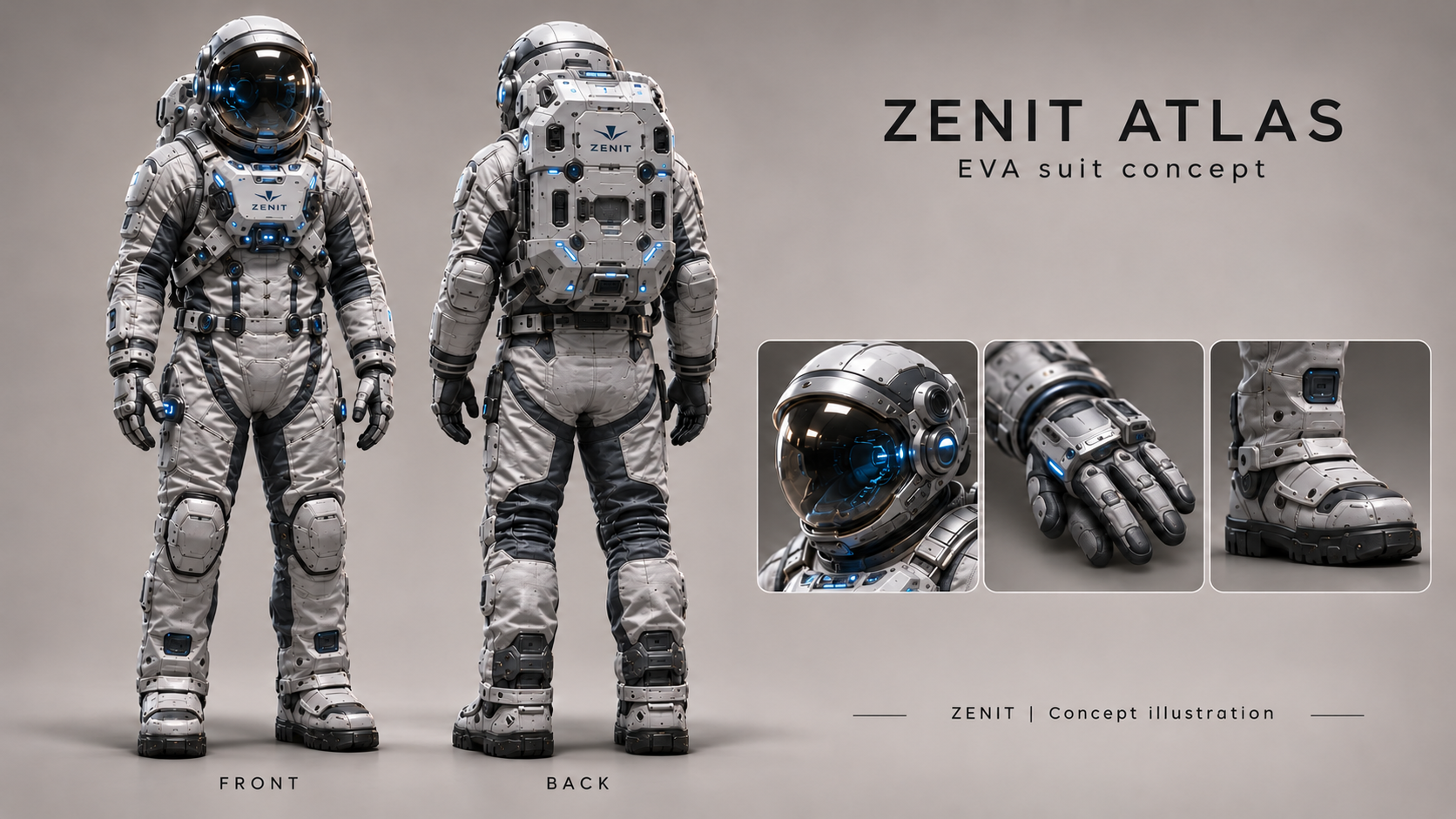
Front and back views bring the Atlas EVA suit and shipboard outfit into focus. Each illustration develops the original concept design, available below as a reference.
SPACE / REFINED CONCEPT
Atlas Series EVA Suit
The Atlas concept brings together a HUD visor, communications, a life-support pack, tool interfaces and magnetic boot anchors.
Refined concept illustration preserving the original design. Adaptive textile, posture and sole functions remain development proposals.
03 / TECHNICAL FOUNDATIONS
Build the evidence with the idea.
The Earth concepts draw on established technical fields. Their integration, usability and performance need evaluation; a claim of a new invention would require a separate review of existing work.
01 / Pacific Northwest National Laboratory / Building America
Infrared camera inspections
Technical background on surface-temperature patterns and building inspection. This supports the inspection direction; it does not validate EarthScout.
Research on industrial energy efficiency, surplus-heat recovery, heat pumps and thermal storage informs the HeatPod direction. No published plant saving is a ZENIT rating.
EarthScout is the proposed starting point: a focused inspection record, known reference measurements and a clear comparison after a repair. AirWatch adds sensor-quality questions; HeatPod needs a compatible heat source and demand; SafeSpot Pack needs a defined load and measured reserve. None of the four is presented as built, certified or commercially available.