Propulsion illustrated
Follow the energy from its source to the wheels, propeller or exhaust. Each drawing shows which part of the ZENIT concept turns that energy into useful motion.
ZC-1 · Combustion to wheel torque
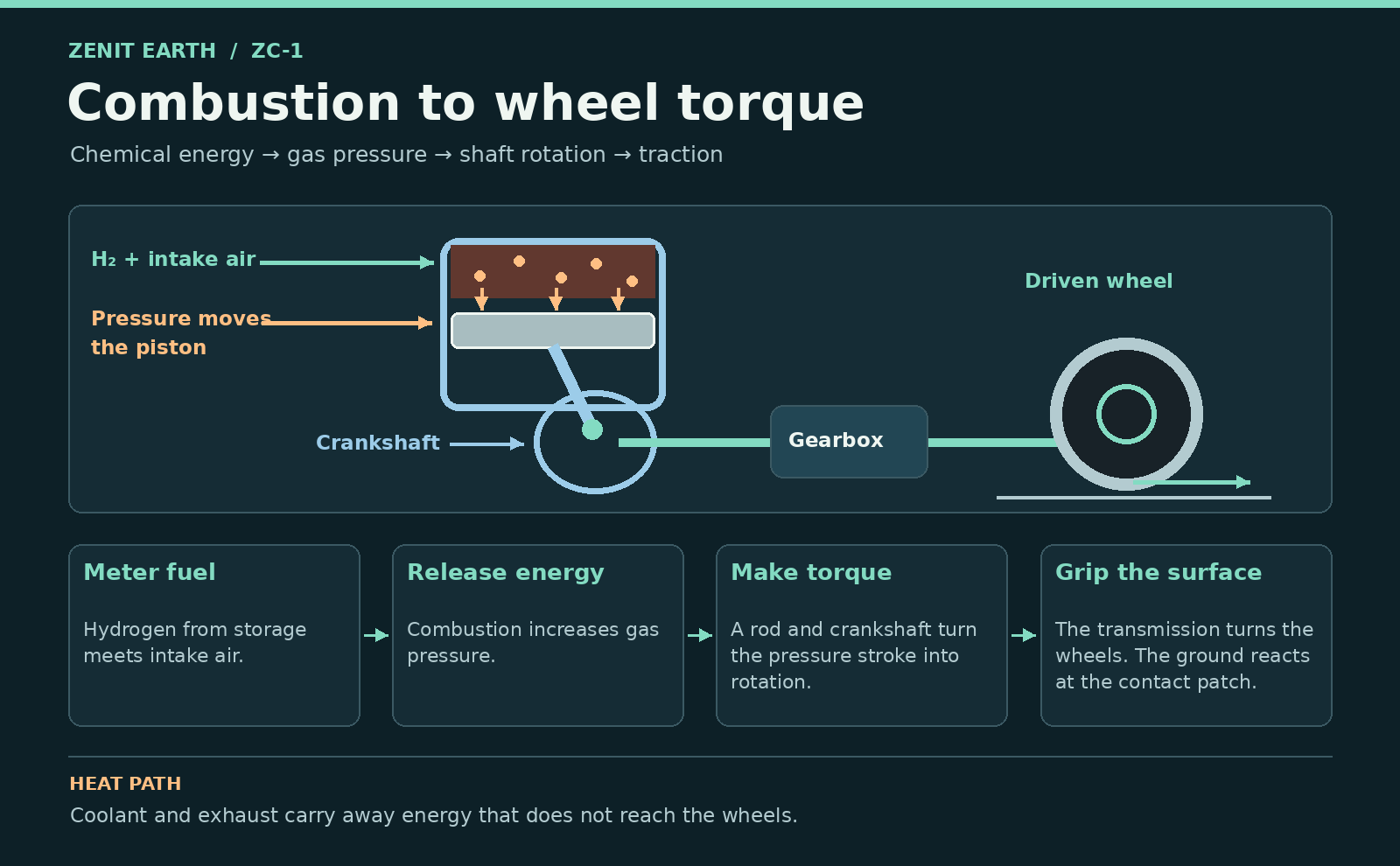
- Regulate the hydrogen supply
A protected feed supplies the engine from onboard storage. The intake supplies atmospheric air.
- Convert chemical energy
Combustion raises cylinder pressure and the expanding gas pushes the piston. The crankshaft converts piston motion into torque.
- Drive the wheels
The transmission routes mechanical power to the driven wheels. Grip at the contact patch determines how much traction the car can use.
- Manage the remaining energy
Heat leaves through the coolant and exhaust paths. ZC-1’s SERAT vapour-management concept addresses combustion water vapour.
ZA-1 and ZA-P01 · Combustion to thrust
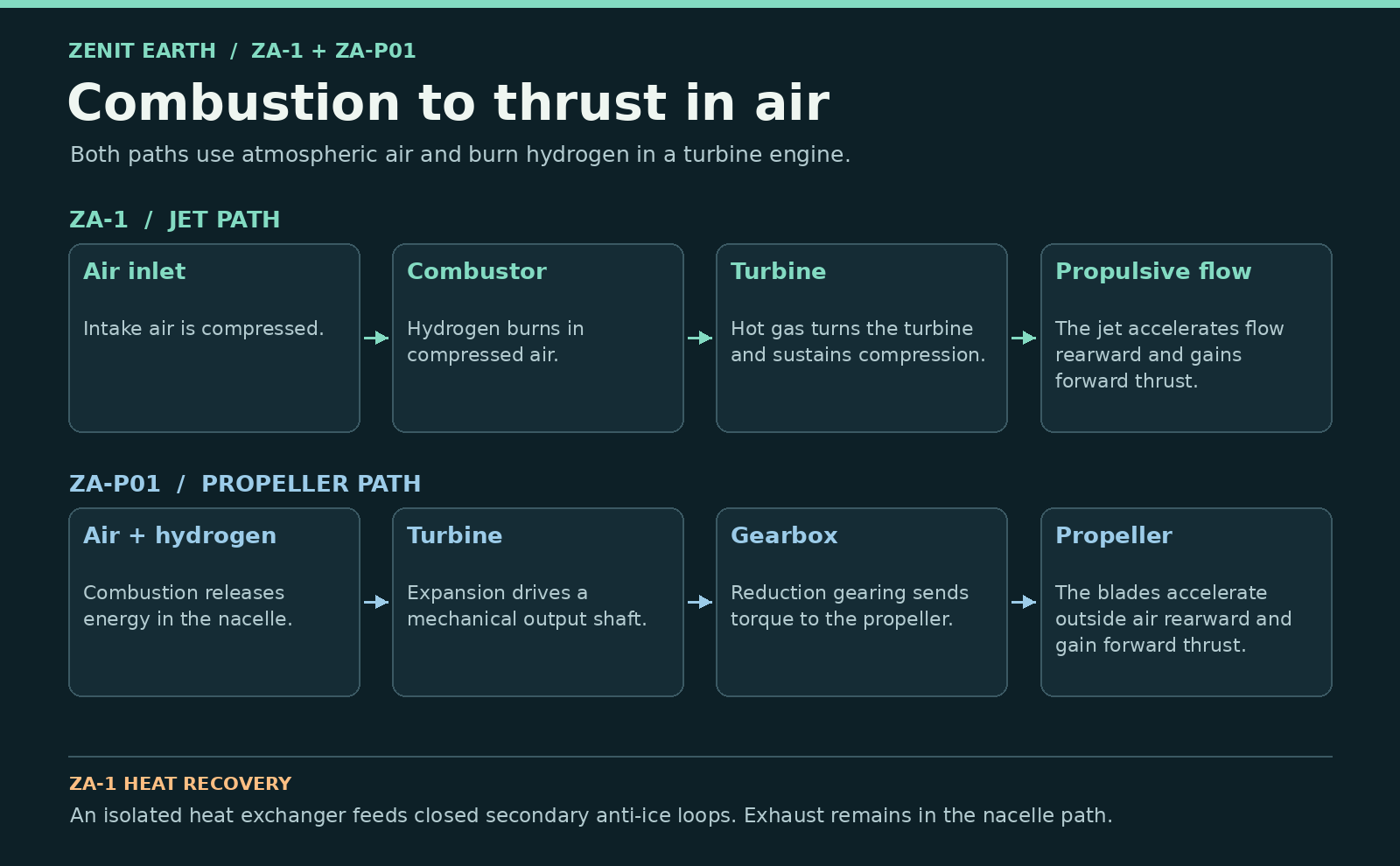
- Admit and compress air
The engine takes in atmospheric air. A compressor raises its pressure before hydrogen burns in the combustion chamber.
- Extract useful work
Hot gas expands through the turbine. In a gas-turbine engine, turbine work sustains compression and can also drive other rotating stages.
- Deliver thrust
In the ZA-1 jet concept the propulsive flow exits rearward. In the ZA-P01 the main mechanical output goes through a gearbox to the propeller, which pushes outside air rearward.
- Manage heat separately
ZA-1’s proposed nacelle exchanger passes recoverable heat to closed secondary anti-ice loops. The exhaust remains on the engine side.
Qi Fleet propulsion · Zorak example
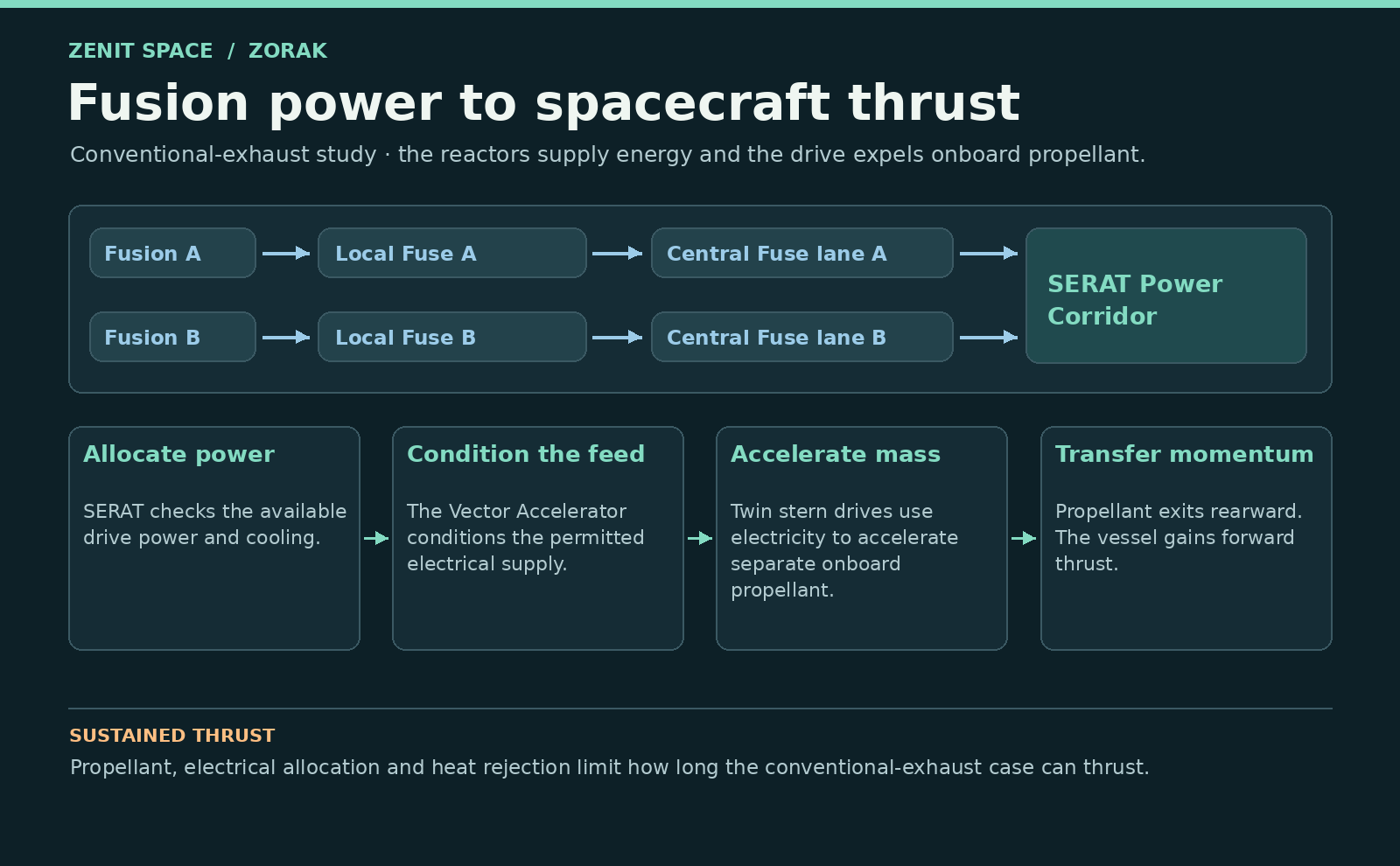
- Supply onboard electricity
Every Qi vessel draws from the power source specified for its class. Zorak’s Fusion A and B feed two protected electrical lanes.
- Allocate protected drive power
Available electricity and cooling set the drive allocation. The Zorak design routes conditioned electricity through its protected SERAT feeds.
- Use the drive to manoeuvre
In a conventional exhaust drive, electricity accelerates carried propellant. The exhaust gains momentum in one direction and the vessel gains momentum in the opposite direction.
- Reject heat and check reserves
The cooling system removes drive heat. The next powered interval depends on the vessel’s electrical and thermal margin and, for conventional exhaust, on its remaining propellant.
Planetary roadsters · Stored energy to traction
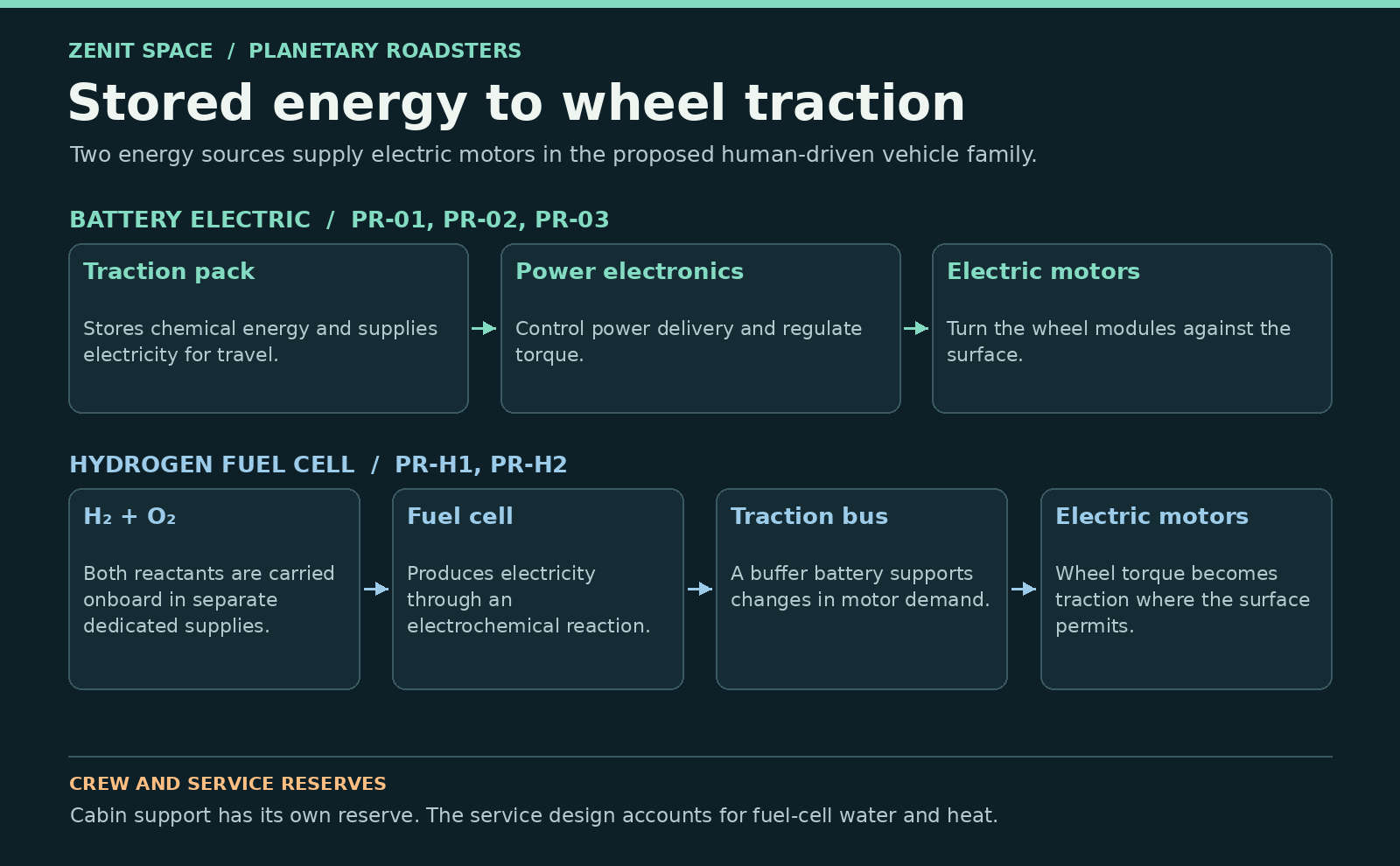
- Draw energy from the selected source
The battery-electric vehicles use a protected traction pack. The fuel-cell vehicles bring onboard hydrogen and a dedicated onboard oxygen supply, so the study can operate without oxygen in the local atmosphere.
- Supply the traction bus
A fuel cell turns chemical energy into electricity electrochemically and produces water and heat. A battery buffer supports changing motor demand on the fuel-cell variants.
- Use motors at the wheels
Power electronics regulate electric motor torque. Wheels apply traction to the surface, so a route assessment depends on terrain and available grip.
- Protect the return and the crew
Traction, cabin services and emergency reserves each have an assigned role. Refuelling and charging are planned at a compatible service station, with separate reactant supplies for the hydrogen variants.
U.S. Department of Energy · How fuel-cell electric vehicles work
The diagrams show concept energy paths. The linked models give the design context and study limits.