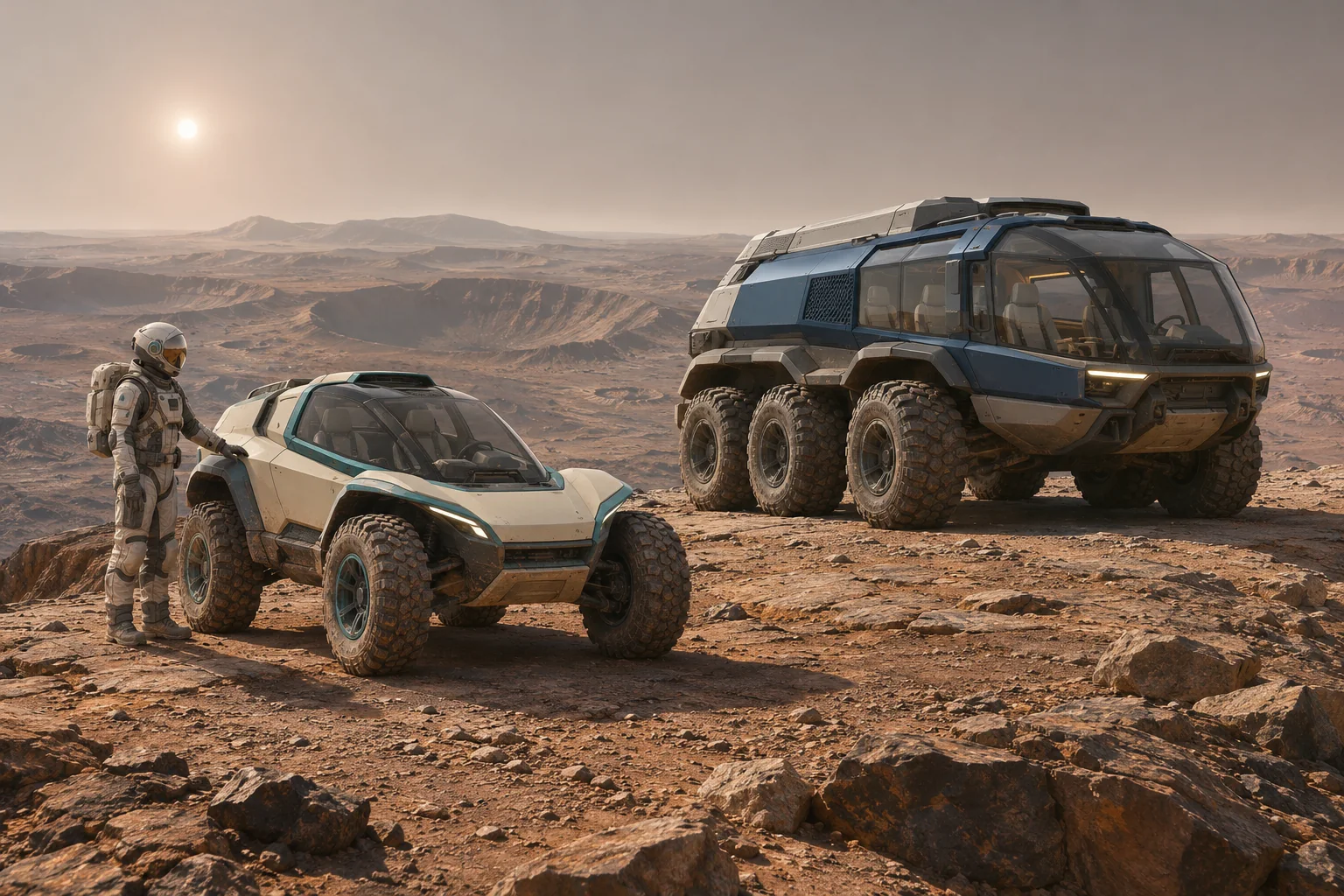
Five human-driven vehicles for work on other worlds. The roadsters travel secured in storage and are released for a specific surface route. Three use traction batteries and two make electricity onboard with hydrogen fuel cells.
Scout and Traverse in a surface exploration concept.
Inspect the family
Reference model
Model descriptions and the comparison table are available below.
Concept geometry
Drag or use the arrow keys to orbit. Use + or − to zoom.
Move supplies between serviced surface facilities.
Two ways to power the wheels
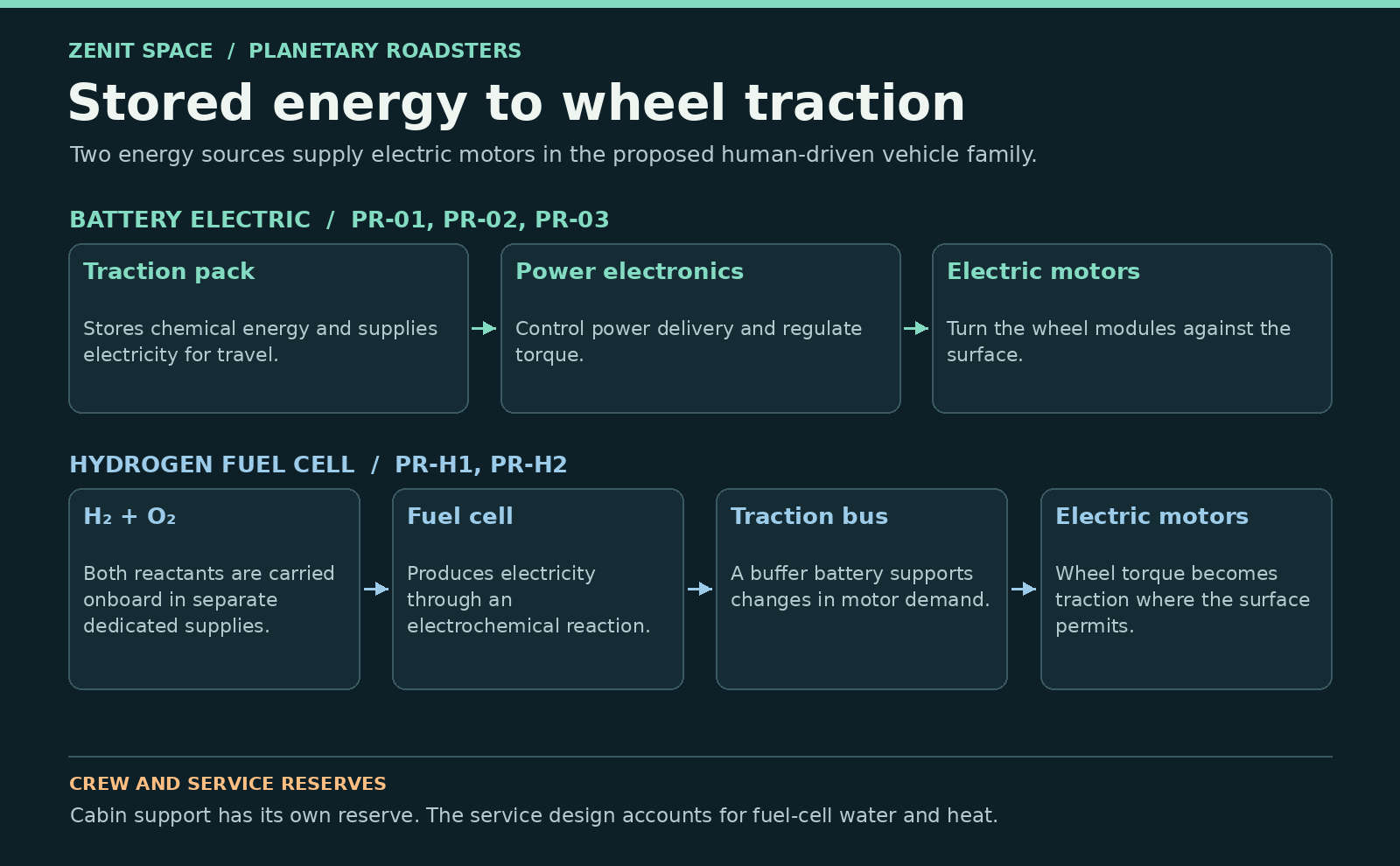
Scout, Traverse and Utility draw power from a traction battery. Range and Cargo carry hydrogen and their own separate oxygen supply for the fuel cell. Both families drive the wheels with electric motors.
The fuel-cell variants assume a compatible refuelling station. The design accounts for fuel-cell water and heat and keeps its reactant oxygen separate from the crew’s breathing supply.
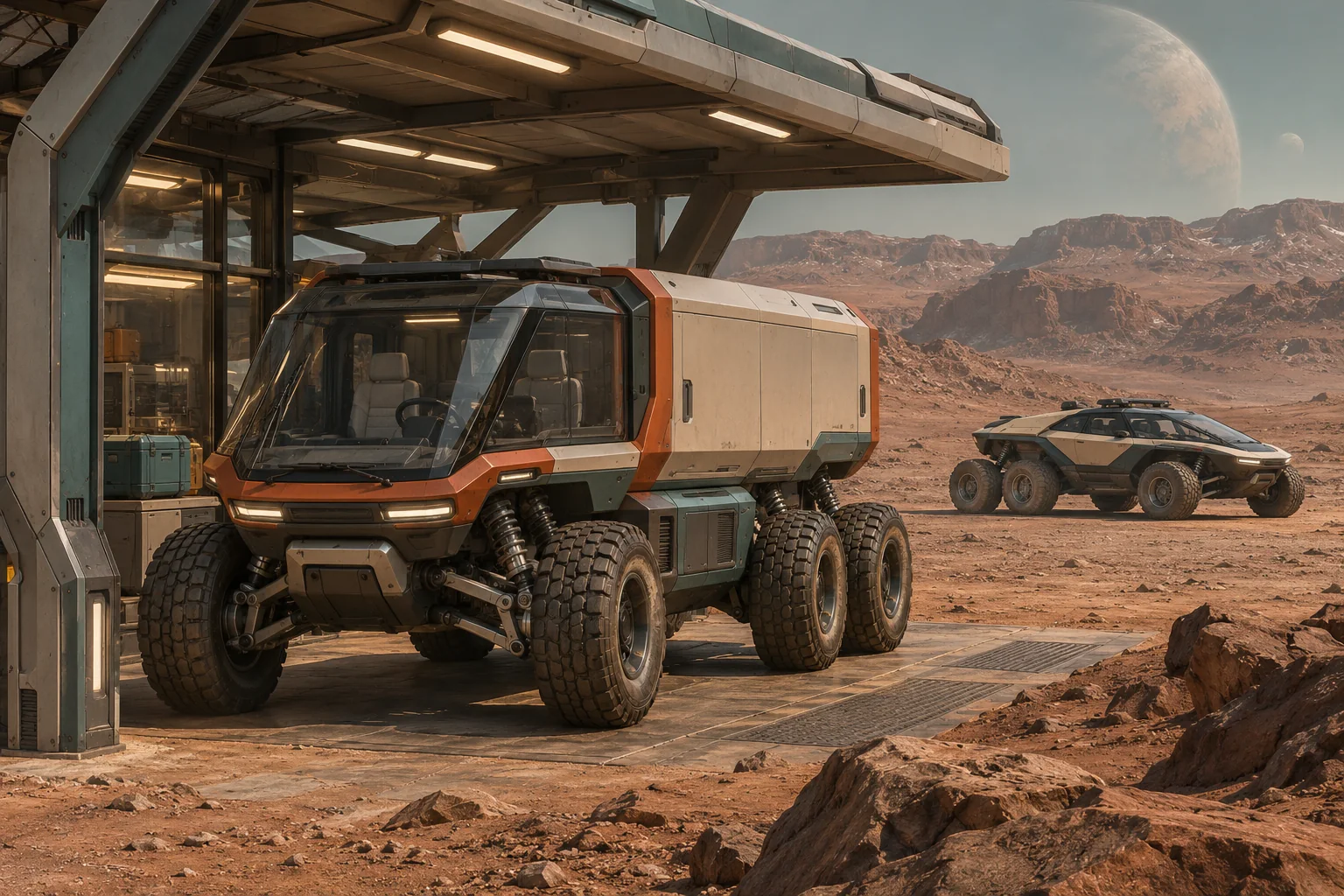
Range and Cargo shown at a proposed surface service shelter. Their missions depend on a qualified supply of both reactants.
Both roadster families use electric traction. The battery models store their driving energy in a pack. The hydrogen models carry fuel and a separate oxygen supply for their fuel cell, with a battery buffer for traction demand. Open full-size diagram
Stow the vehicles until the crew needs them
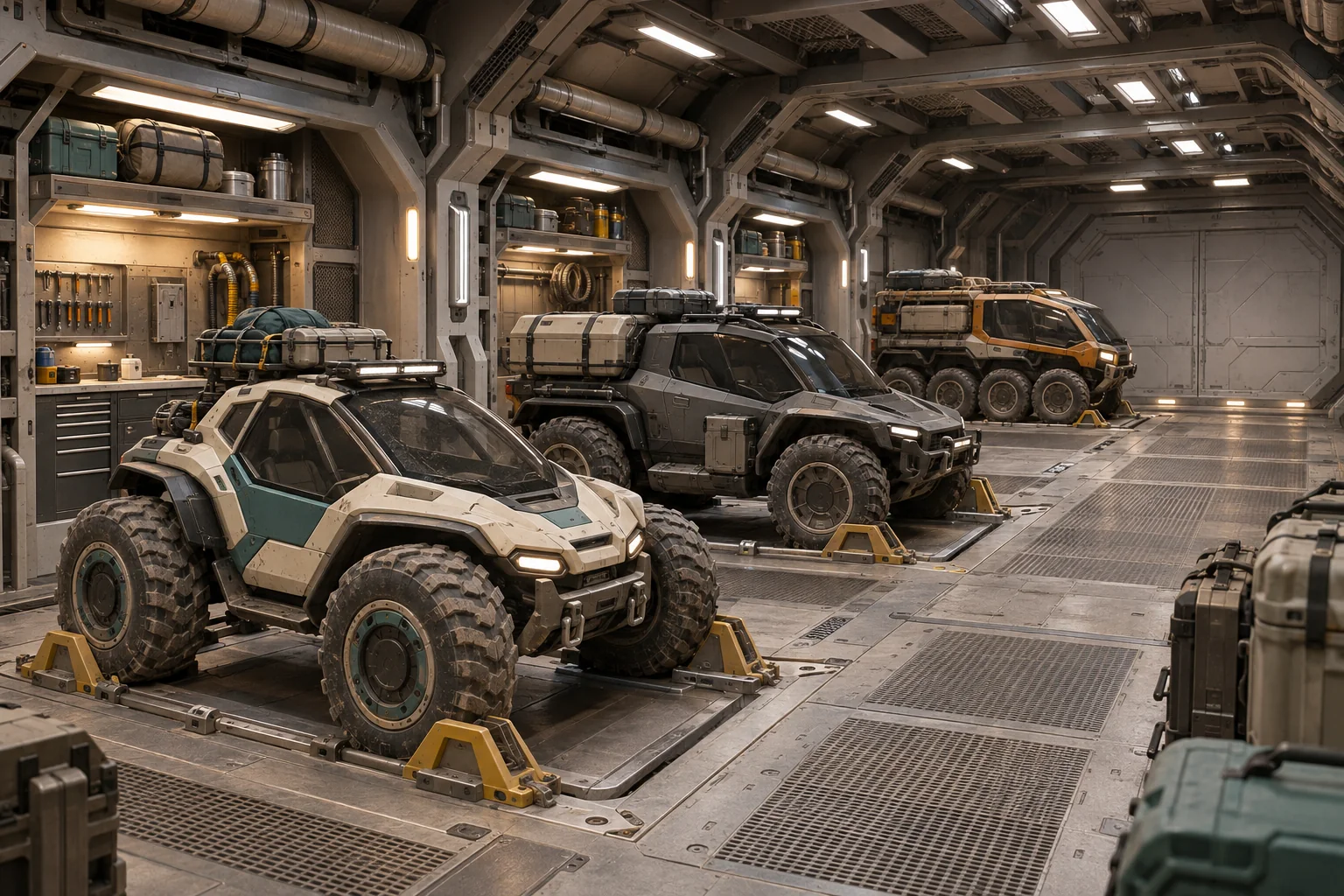
Norak is the fleet’s sole shipboard roadster carrier. Its R3 study allows a 12 × 9 × 4 m clear bay for Scout and Cargo. The interactive model illustrates the earlier bay concept. Surface depots handle hydrogen and oxygen servicing.
Secure and monitor. Store the roadsters unoccupied with traction isolated, equipment restrained and vehicle condition monitored.
Release after landing or depot handover. Check the route, available energy, cabin readiness and return margin before clearing a roadster for crew boarding and release.
Return and stow. Check the wheels, seals, equipment and reserves after the sortie. Secure the vehicle before servicing it at the compatible bay.
Storage-bay concept. Wheel cradles restrain the vehicles, and the aisle leaves room to check and release a selected roadster.
Concept studies. Suitability depends on the destination’s terrain, gravity, pressure, dust and temperature. Cabin integrity, range, stowage compatibility and servicing remain qualification work.